In linguistics, code switching can be described as a person changing their language, accent, or dialect depending on the situation. However, it also can pertain to changing cultural behavior, mannerisms, or styles of dress, or modifying appearance in other ways, such as covering tattoos.
In some ways, I have become an expert in code-switching.
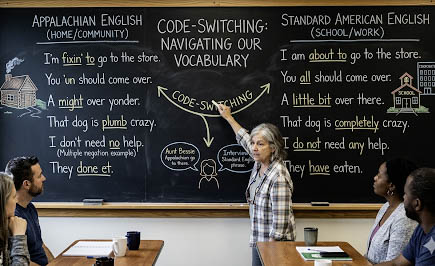
My great grandmother of blessed memory, through whom my Jewish ancestry came on my mother’s side, grew up in Appalachia and spoke in what has often been called the old Appalachian dialect. She lived to be 111 years old, passing away when I was in my late thirties, so I knew her well.
Because of her and the influence of her way of speaking on my grandmother (who lived to be 99 years old), I can easily understand Appalachian dialect and have been called upon to “translate” a few times in my life:
- My first job out of college was as a newspaper reporter for a daily paper. When the old mountain preachers wanted the newspaper to include a notice about a church event, they had to come into town to bring the notice. I was often called upon to speak with the preachers because I was the only person in the newsroom who could understand what they were saying
- After living in northern Indiana for 20 years, I returned to North Georgia with my husband and daughter, both of whom had spent their entire lives in Indiana. Shortly after returning, my daughter and I were in the local post office, and I had a short conversation with the postal worker. As we were leaving the building, my daughter grabbed my arm, and with a horrified look on her face, said, “Mom, what language was that man speaking, and how could you understand him?”
- I live in the woods, and there are wooded areas on all sides of the property. One day, a man walked up our driveway to ask if he could look at the wooded property next to us. My husband had been the one to go out and speak to him but had found it necessary to return to the house and ask me to come out because he couldn’t understand a word the man was saying.
When I was growing up, my father (who was from North Carolina)used to drill me and my siblings on the “proper” pronunciation of words so that we wouldn’t sound so country or like we came from the hills. Because of that, and because I lived in Australia for a year and then in Northern Indiana for 20 years, I can move back and forth between dialects and accents and word choices. Many people can’t place my manner of speaking and are surprised that I grew up in the hills of North Georgia.
Similarly, I can code switch back and forth between Jewish and Christian terminology.
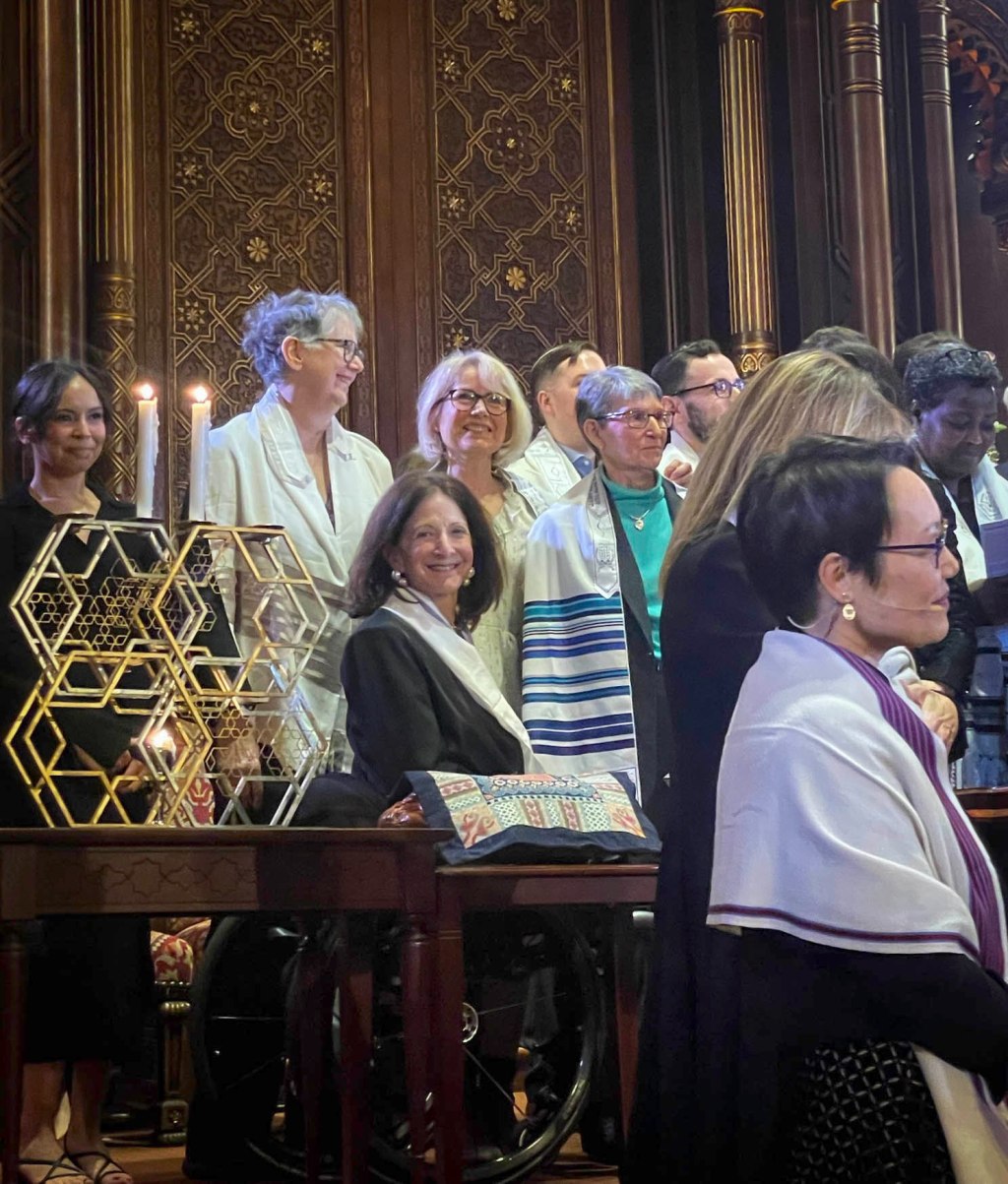
There are very few Jews in my neck of the woods. Everyone I know in my little local synagogue moved here from someplace else, either in connection with a job or to retire. I am the only person who regularly attends services who actually grew up here.
I grew up in the Episcopal Church (there also are very few Episcopalians here) and attended graduate school at a well-known Catholic university where I studied the development of Catholic theology and liturgy. I also have been exposed to many other Christian denominations, including evangelical and Pentecostal churches. And now I am a Jew. (I always was Jewish but have now embraced that ancestry and have become a member of the Jewish people.)
So I can converse using the terminology of Judaism, including words in Yiddish and Hebrew, and I can converse in the terminology of Christianity, including that of the Catholic Church and mainline and fundamentalist Christian churches.
It all makes for an interesting life and interesting conversations.
And interesting encounters, like the time a Jewish family originally from Indiana, who now live further up than I do in the hills of Appalachia, came down to a synagogue service at the synagogue I attend. They play Appalachian music and, after the service, they delighted us with a short concert. And yes, they are singing about getting drunk. LOL






 The Appalachian Jew