“Joy is the ultimate medicine and remedy against fear” (Carlos Santana)
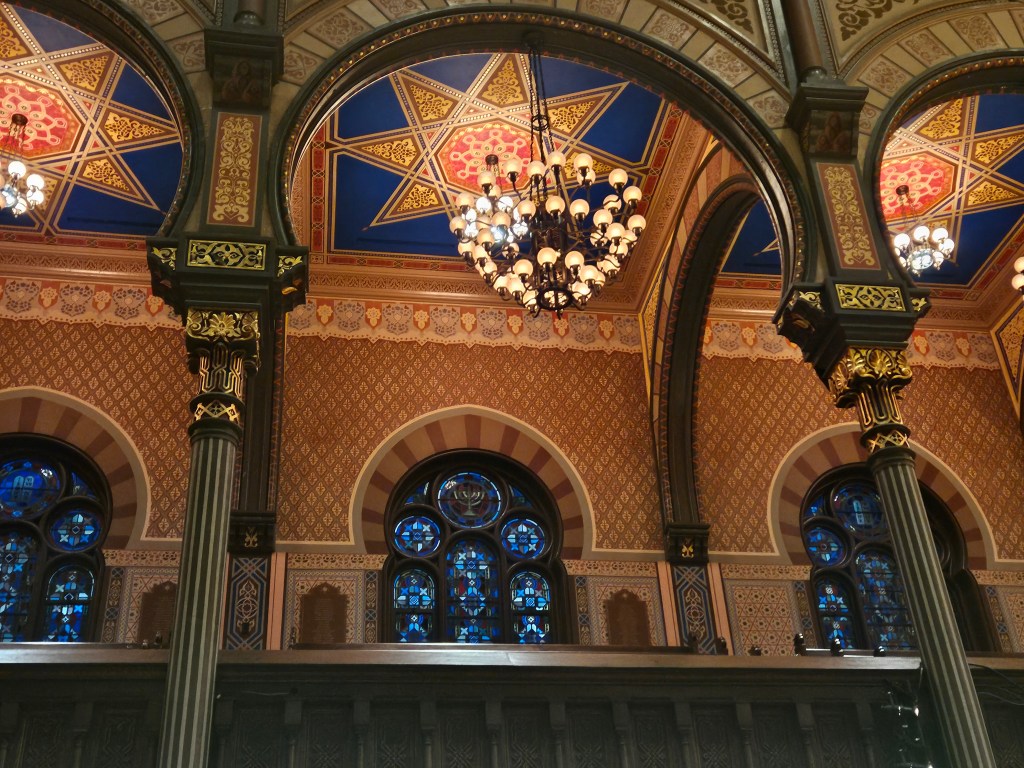
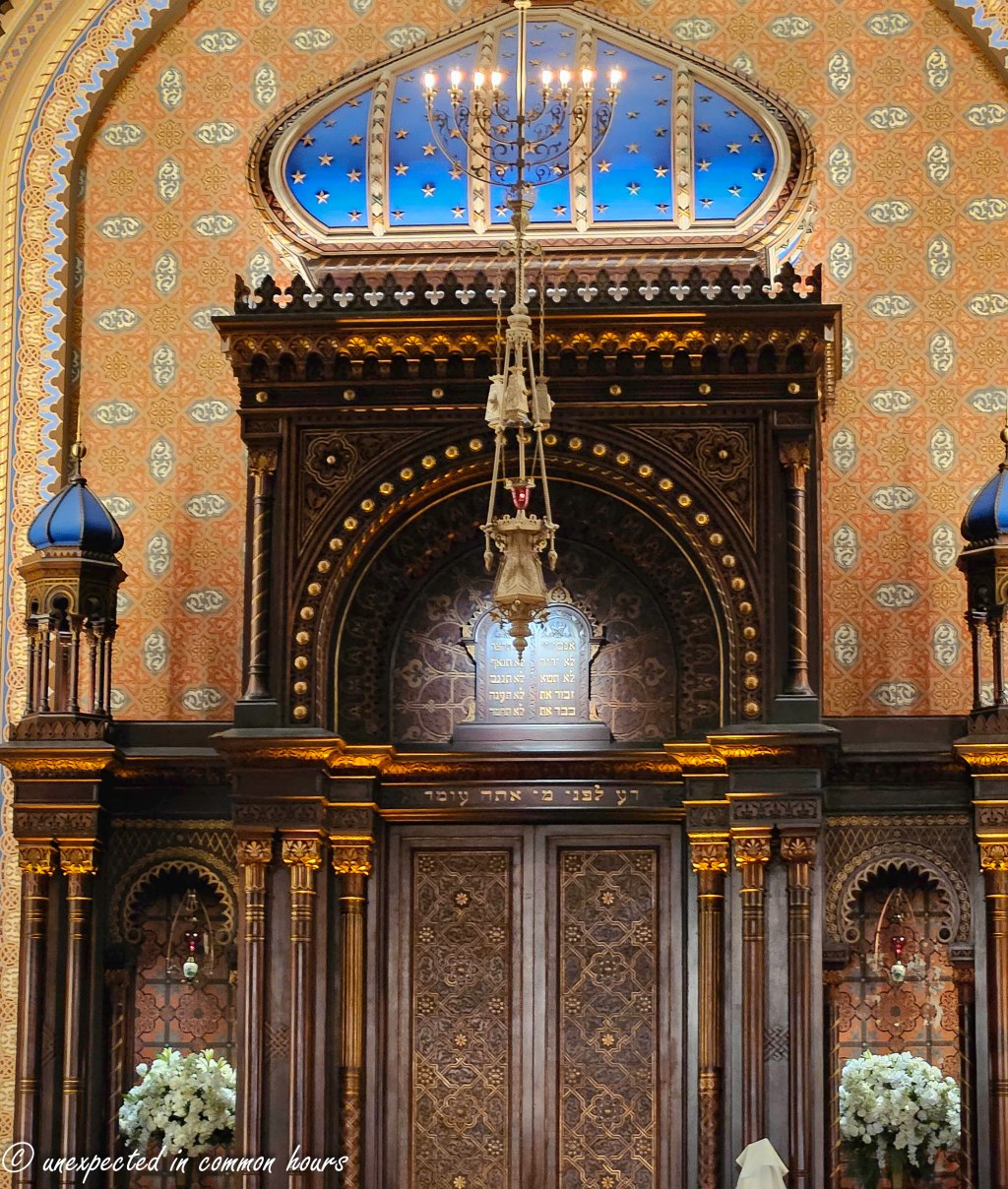
Last Friday night, shortly after the evening Shabbat service at New York’s Central Synagogue began, it was disrupted by a man who stormed the sanctuary, tried to get to the rabbis and cantor on the Bimah (the platform), knocked over lighted Shabbat candles, and screamed anti-Semitic and racial slurs. He was subdued by synagogue security and by an NYPD officer who was working a paid security detail.
As he was being escorted out, the man struck a female member of the congregation who was sitting in a pew and headbutted and spat on the security officer.
The Manhattan District Attorney’s Office has charged him with multiple offenses, including four counts of assault as a hate crime, criminal mischief as a hate crime, and disruption of a religious service.
I was livestreaming the service when this happened, and it was quite frightening to say the least. My connection with Central Synagogue is very close. My conversion was at Central. The rabbis and the cantor on the Bimah that night are all known to me, and many friends were present in the service.
Rabbi Andrew is the rabbi for Central’s online members and has been personally encouraging to me. I was in a Zoom gathering with him the evening before this incident. Rabbi Rebecca, in a Saturday morning service just after my conversion in 2024, gave me the honor of asking me to open the Ark. And I’ve been part of Zoom gatherings with Rabbi Rachel and Cantor Jenna.
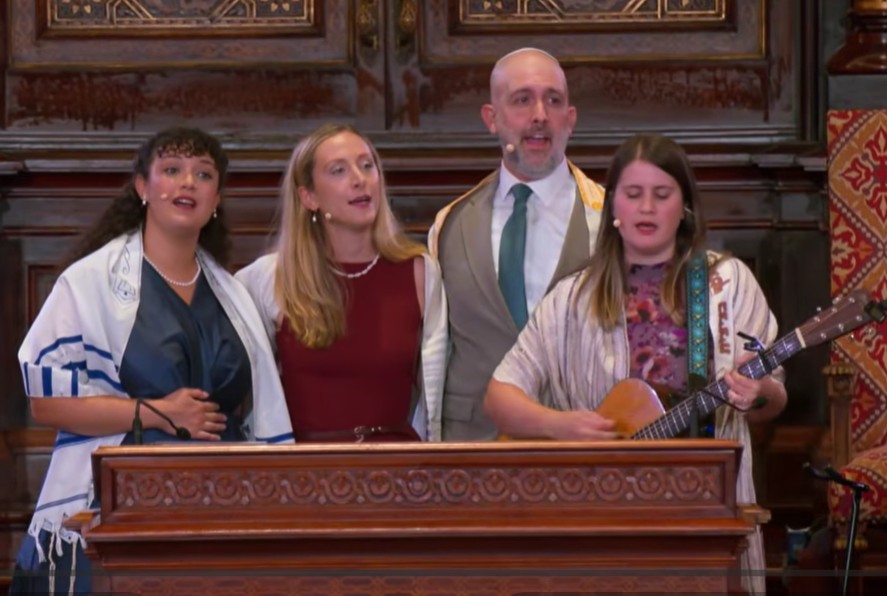
They all responded on Friday night with fear at first, yes, but also with great grace and professionalism. Rabbi Andrew calmed the congregation. Rabbi Rachel extended that calm by having everyone sit quietly and just breathe. These services always begin with joyful singing, and Cantor Jenna, although shaken, re-started the song that had been interrupted. Rabbi Rebecca modified her prepared sermon to speak to the situation.
In other words, the service continued, and joy returned.
The following morning’s service was packed with synagogue members and with those of us who don’t live in New York but who Zoom in to Saturday services. It, too, was a joyful service.
Growing up in Appalachia, I often heard people speaking of joy “in the sweet by and by” or “when we all get to heaven.” It seemed people slogged through this life and looked to a joyful existence after death. I have found in the Jewish faith that Jews look to life here as an opportunity to express joy.
I’ve learned that we can hold two emotions at the same time. Grief and joy. Fear and joy. There’s an ancient Talmudic story of a wedding procession and a funeral procession that meet and block each other’s path. The Jewish sages taught that life takes precedence over death and that the funeral procession should step aside and let the joyous wedding procession pass.
Yesterday, while scrolling through Instagram I ran across many supportive posts about the incident at Central Synagogue and the joy that was present in the service afterwards. However, there was a comment that questioned the joy and declared that it was not joy, but denial.
My answer to that comment is that no one denied anything, not the seriousness of the situation and not the fear it caused. The joy was genuine in spite of what happened.
Jewish joy is an act of resilience and an act of resistance.
“Joy is the ultimate medicine and remedy against fear” (Carlos Santana)
This is a repost from my other blog from three years ago, but as I’m currently sitting here without shoes, I thought I would post it here as well.
Some thoughts on going barefoot
Lately I’ve noticed that, without thinking, I have kicked off my shoes and am walking around my house barefoot.
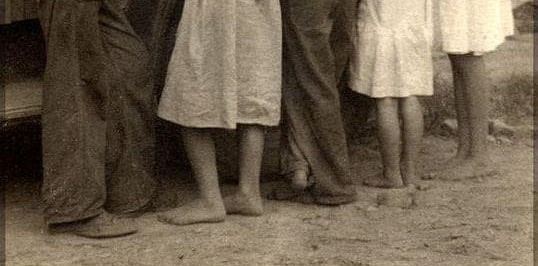
When I was a child we went barefoot all of the time during the summer months. Back then, there were no restrictions on going into restaurants or stores without shoes.
We played in the street, and it would be so hot that the tar with which the streets were patched began to melt and stuck to the bottom of our feet. But our feet were so tough that we didn’t even feel the hot tar. We just couldn’t remove it in the bath. My mom always just said, “Nevermind. It will wear off.”
Photo credit: Goleta History
We rode bicycles barefoot. We made homemade skateboards from old roller skates and actual boards and rode them down the hill barefoot.
Photo credit: freerangekids.com
Scene from the film “Skater Dater,” which I remember seeing when I was young. For years, people laughed at me and told me I was making up that title. But I found the video on YouTube.
As I grew older and began driving a car as a teenager, I drove barefoot. All of my friends did. I remember when we heard that it was illegal in the state of Florida to drive without shoes, and we were horrified because we all had driven barefoot while in Florida on vacation.
Photo credit: Society for Barefoot Living
Even university students walked around campus without shoes. I certainly did. And we went to class barefoot.
Photo credit: LSU Reveille
All of that stopped when I went north to graduate school, and people looked at me as if I had two heads when I went without shoes in warm weather.
Stereotypes abound of people who live in the Southern U.S. in the area known as Appalachia, and that’s where I grew up and currently live. We’re ignorant, backwards, poor, and never wear shoes. That’s what some people still think of us.
But I grew up in a town in a prominent, privileged family, highly educated and certainly not poor. Yet my mother, whose family was the prominent one in that town, never wore shoes during the summer. My father never talked much about his childhood, but according to his sister they grew up in abject poverty. Dad became a prominent inventor and entrepreneur, and I almost never saw him without shoes. So there we have it.
I like going without shoes and am enjoying going shoeless this summer. How about you? Shoes or no shoes?
As always: Slava Ukraini! Слава Україні! #StandWithUkraine
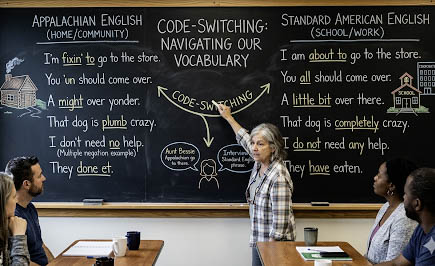
In linguistics, code switching can be described as a person changing their language, accent, or dialect depending on the situation. However, it also can pertain to changing cultural behavior, mannerisms, or styles of dress, or modifying appearance in other ways, such as covering tattoos.
In some ways, I have become an expert in code-switching.
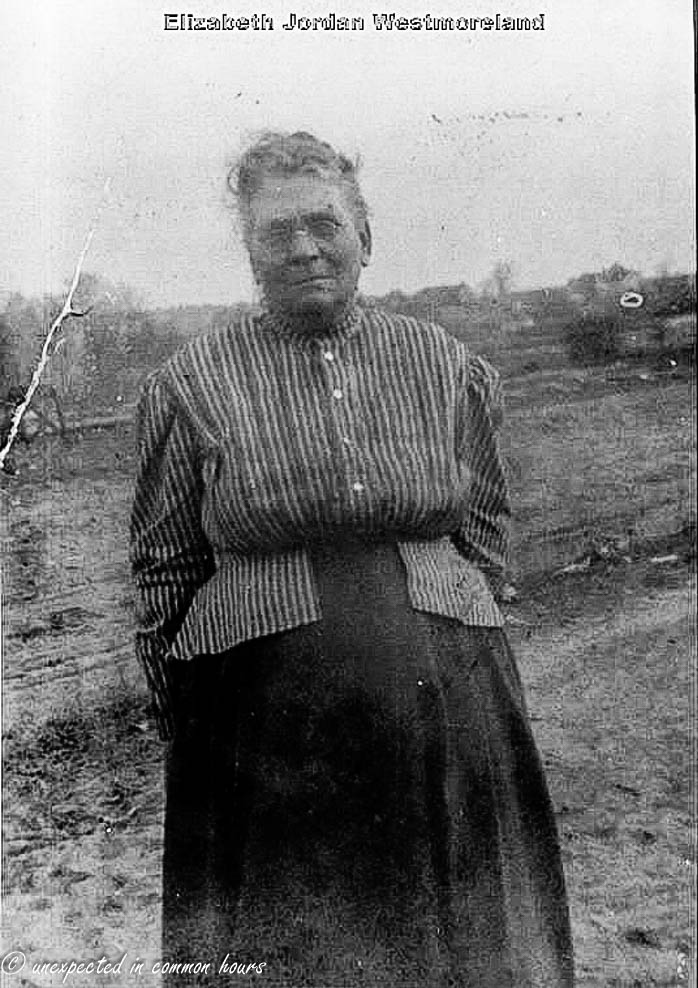
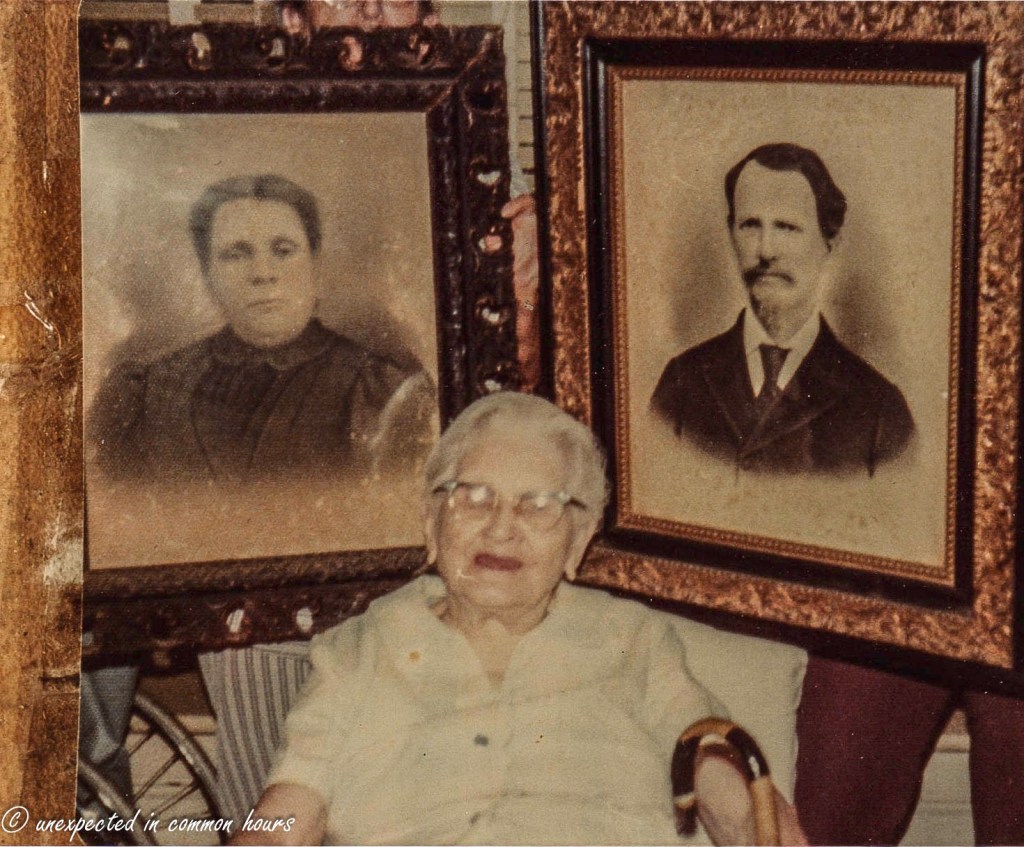
My great grandmother of blessed memory, through whom my Jewish ancestry came on my mother’s side, grew up in Appalachia and spoke in what has often been called the old Appalachian dialect. She lived to be 111 years old, passing away when I was in my late thirties, so I knew her well.
Because of her and the influence of her way of speaking on my grandmother (who lived to be 99 years old), I can easily understand Appalachian dialect and have been called upon to “translate” a few times in my life:
My first job out of college was as a newspaper reporter for a daily paper. When the old mountain preachers wanted the newspaper to include a notice about a church event, they had to come into town to bring the notice. I was often called upon to speak with the preachers because I was the only person in the newsroom who could understand what they were saying
After living in northern Indiana for 20 years, I returned to North Georgia with my husband and daughter, both of whom had spent their entire lives in Indiana. Shortly after returning, my daughter and I were in the local post office, and I had a short conversation with the postal worker. As we were leaving the building, my daughter grabbed my arm, and with a horrified look on her face, said, “Mom, what language was that man speaking, and how could you understand him?”
I live in the woods, and there are wooded areas on all sides of the property. One day, a man walked up our driveway to ask if he could look at the wooded property next to us. My husband had been the one to go out and speak to him but had found it necessary to return to the house and ask me to come out because he couldn’t understand a word the man was saying.
When I was growing up, my father (who was from North Carolina)used to drill me and my siblings on the “proper” pronunciation of words so that we wouldn’t sound so country or like we came from the hills. Because of that, and because I lived in Australia for a year and then in Northern Indiana for 20 years, I can move back and forth between dialects and accents and word choices. Many people can’t place my manner of speaking and are surprised that I grew up in the hills of North Georgia.
Similarly, I can code switch back and forth between Jewish and Christian terminology.
There are very few Jews in my neck of the woods. Everyone I know in my little local synagogue moved here from someplace else, either in connection with a job or to retire. I am the only person who regularly attends services who actually grew up here.
I grew up in the Episcopal Church (there also are very few Episcopalians here) and attended graduate school at a well-known Catholic university where I studied the development of Catholic theology and liturgy. I also have been exposed to many other Christian denominations, including evangelical and Pentecostal churches. And now I am a Jew. (I always was Jewish but have now embraced that ancestry and have become a member of the Jewish people.)
So I can converse using the terminology of Judaism, including words in Yiddish and Hebrew, and I can converse in the terminology of Christianity, including that of the Catholic Church and mainline and fundamentalist Christian churches.
It all makes for an interesting life and interesting conversations.
And interesting encounters, like the time a Jewish family originally from Indiana, who now live further up than I do in the hills of Appalachia, came down to a synagogue service at the synagogue I attend. They play Appalachian music and, after the service, they delighted us with a short concert. And yes, they are singing about getting drunk. LOL
Today, March 14 2026, is the second anniversary of my conversion to Judaism.
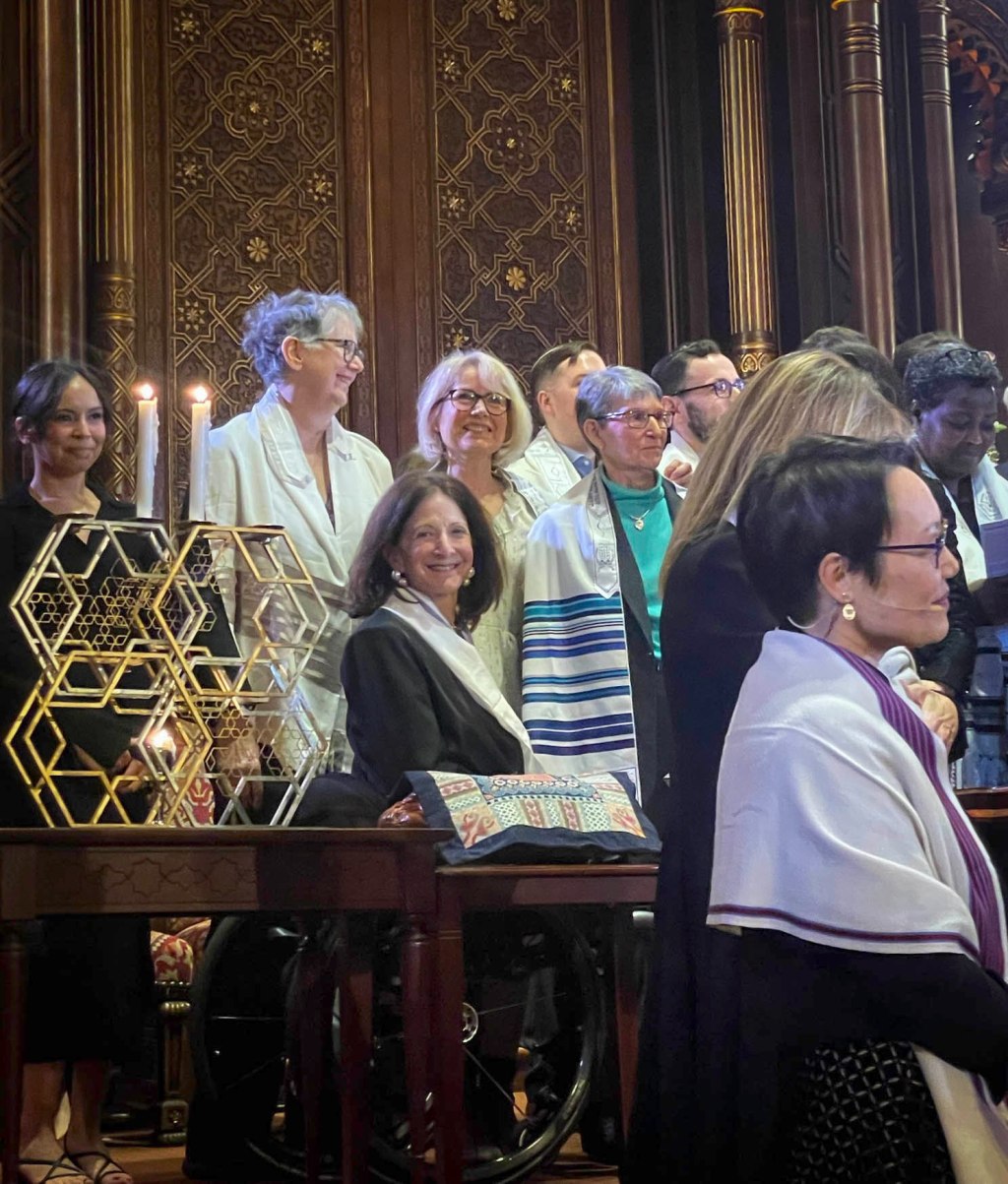
The day after conversion, along with others who had converted during the previous year, I was on the bimah at Central Synagogue in New York City during the Friday evening Shabbat service to be recognized and to receive the priestly benediction from Senior Rabbi Angela Buchdahl (bottom right). I am in the turquoise turtleneck.
I received this photo today from my friend and conversion colleague Rosemary, who is seated in a wheelchair and is looking directly at the camera. Her husband took the photo, and today is the first time I have seen it.
The worship song “Lord, Prepare Me to Be a Sanctuary,” written by a songwriter with Appalachian roots, can be found in many modern Christian hymnals and is sung in many Christian churches. However, it also is sung in Jewish synagogues.
Also known simply by the title “Sanctuary,” the song was written by Randy Scruggs and John W. Thompson.
Scruggs, who wrote the lyrics, was famous in his own right as a musician, producer and songwriter, and was the son of Appalachian bluegrass musician Earl Scruggs, remembered for popularizing a three-finger style of playing the banjo.
This past week, “Sanctuary” was sung at Central Synagogue in New York City in conjunction with the assigned Torah portion of the week, the portion from the Book of Exodus in which Moses was instructed to have the Hebrew people build the Mishkan, the portable sanctuary that would travel with them through the desert.
As an online member of Central Synagogue, I participated in a Wednesday Torah study during which we all sang “Sanctuary.” We sang it again during the Friday night Shabbat service which I livestreamed, and a third time during the Saturday morning Mishkan service in which I participate through Zoom.
I wonder how many Jews realize that this was written as a Christian song by someone with Appalachian roots. And I wonder how many Christians know that Jews also sing the song during services, often adding words from Exodus in Hebrew:
V’asu li mikdash (Make for me a sanctuary)
V’shochanti b’tocham (That I may dwell among them)
Va’anachnu n’varech yah (And we will bless God/Yah)
Me-ata v’ad olam (From now and forever)
Here, Julia Cadrain who is a former cantor at Central Synagogue, sings both the Hebrew and English lyrics. (Note: Although the title of the video says that this is a Shaker hymn, it is a contemporary song, copyrighted in 1982.)
Livestreaming services from Central Synagogue in New York is what made me aware that there was a path by which I could convert to Judaism.
Central Synagogue has a Center for Exploring Judaism, established in 2010 and geared mainly towards those with a Jewish partner or spouse, helping them to understand the Jewish faith and what it means to live a Jewish life. But the program also is open to individuals who desire to explore Judaism. Originally, all classes were held in person at the synagogue, but in recent years online cohorts have been comprised of people literally from around the world.
In late Spring 2023, I contacted Rabbi Lisa Rubin, director of the Center for Exploring Judaism to ask about being accepted into the program. What fascinated me about the hour-long interview with her was that one of the first things she said to me was that she was wondering why a Jewish person (me) would want to be in a cohort group. She considered me to be already living a Jewish life. When I explained that I had been raised as a Christian by parents who also were raised as Christians (even though they knew they were Jewish), she agreed that actual conversion would be the proper course of action for me.
My cohort group consisted of about 40 people from throughout the U.S. and from several other countries. Classes extended over a six-month period from July through December 2023, met once a week on Zoom, and were conducted like university classes. We had a syllabus, several required books, and weekly assignments and were expected to actively participate in class discussions and complete two projects . Both projects could be submitted after classes ended, but no one could be considered an actual candidate for conversion until both were turned in. In addition, each of us had to meet individually on Zoom with Rabbi Rubin on a regular basis.
The following is from Central Synagogue’s website:
Summary of the Conversion Process
1. Initial meeting with Rabbi Lisa Rubin, our Director of the Center for Exploring Judaism In this introductory meeting, we will discuss your background and interest in Judaism and do our best to ascertain whether our program may be a good fit for you.
2. Enrollment in our Exploring Judaism course Our course covers the foundations of Judaism: holidays, history, prayer, theology, and life cycle. A new class begins every other month and we meet weekly for a six-month period.
3. One-on-one meetings with Clergy These regular meetings (during the six-month period of the Exploring Judaism course) are for individual guidance and mentorship.
4. Extended study after the course Conversion candidates are encouraged to study with a rabbi as long as is needed to attain confidence with a basic “literacy” of Judaism. Time will vary with each student.
5. Completion of a conversion project and spiritual autobiography Students are asked to complete two small projects toward the end of the conversion process.
6. Bet Din and Mikveh A bet din (rabbinic court) will be assembled on the day of your conversion followed by a visit to the mikveh (ritual bath).
I submitted my second project in February 2024, thinking I probably was the last person in my cohort to submit their work, but this turned out not to be the case. In addition, I had been under the impression that each of us would be assigned to another rabbi at Central Synagogue to continue studies until such time as that rabbi determined we were ready to complete conversion. That also turned out not to be the case for me.
As soon as Rabbi Rubin had my second assignment in hand she asked me when I could come to New York to complete my conversion.
Conversion
I made the trip to New York in mid-March 2024 and formally converted to Judaism on March 14. Unlike in Christianity, in which conversion is often a public event including baptism witnessed by friends and family, conversion in Judaism is a private event involving only the convert and three rabbis.
My Bet Din, or rabbinic court, consisted of three female rabbis, all of whom teach in the Center for Exploring Judaism.
(Two other members of my cohort converted on the same day and one had a different configuration of rabbis on her Bet Din.)
I expected an intimidating scene in which I would be grilled by the rabbis on various aspects of Judaism, but it turned out to be a delightful discussion. All three rabbis considered me to be living a Jewish life and told me that they saw me not so much to be converting as returning to the faith my ancestors had once practiced but that had been hidden for several generations.
As part of my conversion I was formally given my Hebrew name, which, as an adult, I had chosen. I kept my given name, given to me at birth by my mother who had named me for a heroine in the Hebrew scriptures, but I changed my middle name from Leigh (Leah) to Shira, a name that means song because I have always been a singer. דבורה שירה
Immersion in the mikveh, the ritual bath, is an integral part of conversion. Central Synagogue uses the community mikveh on the Upper West Side in Manhattan. Those coming to the mikveh enter from the street through a rather non-descript door to find a beautiful, spa-like atmosphere inside. As a convert, I immersed in the mikveh’s warm water alone, completely submerging three times and saying a specific blessing after each immersion. The rabbis waited outside the door and greeted me with a rousing chorus of Siman Tov Mazel Tov.
Here’s what that sounds like…
Afterwards, I was given the priestly benediction and was declared to be officially a part of the Jewish people.
The priestly benediction can be heard here, beginning at about 3:11 in the video. Here, Central Synagogue’s Senior Rabbi Angela Buchdahl gives the blessing to former Supreme Court Justice Stephen Breyer who had been interviewed at the synagogue…
The evening following my conversion was a Friday, and at Central’s Friday night Shabbat service, I along with many others who had converted at Central Synagogue in the preceding twelve months, was called to the bimah (the platform at the front of the synagogue) to bless the reading of the Torah and to receive the priestly benediction.
In this photo, which features Rabbi Rubin from the Center for Exploring Judaism, I am among the group on the bimah although, because I am so short, I cannot be seen.
I returned home from New York a different person, knowing for certain what I had “known” all of my life, that I was, in fact, a Jew. I finally was where I belong.
The following song from Temple Israel Westport expresses what I had always known. Written and sung by Cantor Becky Mann, on the left, joined by Cantor Julia Cadrain (formerly at Central Synagogue) on the right, it says, “You’ve always belonged here.”