Tag: ancestry

  • The Melungeons: Conversos, Crypto-Jews and Hidden Jews in Southern Appalachia – Part 4 , Rediscovering Jewish Origins

    The Melungeons: Conversos, Crypto-Jews and Hidden Jews in Southern Appalachia – Part 4 , Rediscovering Jewish Origins

    Modern-day Melungeons who are rediscovering their Jewish ancestry are faced with asking:

    • For how many generations was my family aware of their heritage?
    • How was this information transmitted and by whom?
    • Is it anywhere written down, preserved or recorded?
    • Who else knew about us, and what did they know?
    • When and how were decisions made to bury this information?
    • Is it even possible for a family to have held onto vestiges of this heritage and passed them down for 500 years?

    The answer to that last question is yes.  For her book Suddenly Jewish: Jews Raised as Gentiles Discover Their Jewish Roots, Barbara Kessel interviewed descendants of Spanish settlers of the American Southwest. 


    Many of the original Europeans in the Southwest were Crypto-Jews who lived outwardly as Catholics but secretly as Jews, and their descendants are just now learning about their true heritage.  Many are converting to Judaism. Kessel quoted one interviewee as saying, “…five hundred years and now I find myself home…You can be away five hundred years and then come home… Nobody said Kaddish (the Jewish Mourners’ Prayer) for this family for five hundred years.  This will be my project.” 

    If families in the Southwest can hold onto and pass down, even in small ways, information about their heritage, it certainly can also be true of Melungeon families in Appalachia.

    Also from Kessel’s book, “Parents who deny their Jewishness inevitably send out signals.  They leave clues that their children pick up on, though neither side – parent or child- may be consciously aware of what is happening.” 

    Kessel quotes Canadian psychiatrist Robert Krell, “I think it’s hard for parents not to, from time to time, give a hint.  There may be a thousand slips of the tongue which the child does not connect to being Jewish.  Yet there is a subtle awareness.  The question becomes: when does the observation get crystallized by the child into the construct,’Perhaps I am a Jew?’”


    My Family’s Journey

    I often wonder when in my family the decision was made to hide our Jewish heritage. I now know that I am Melungeon and Sephardic (Jewish from the Iberian peninsula, that is, Spain and Portugal) on both sides of my family and also Askenazic (Jewish from Eastern Europe) on my father’s side.

    Both my mother and my father knew they were Jewish but hid that fact and lived as Christians. My grandparents were nominal Christians, as were some of my great grandparents. Whatever led my family to decide to hide their heritage, that decision was certainly cemented in the early 1900s.

    One of my great grandfathers, an attorney and newspaper editor and publisher, was serving in the Georgia State Legislature in 1913-1914 during the time of the arrest and trial of Jewish businessman Leo Frank. My great grandfather was described in Atlanta newspaper reports as being “broad and liberal in his views,” and he was noted for voting for progressive legislation. He would have been well-known by other newspaper editors and prominent politicians of his day.


    My great grandfather, Travis Glenn Dorough


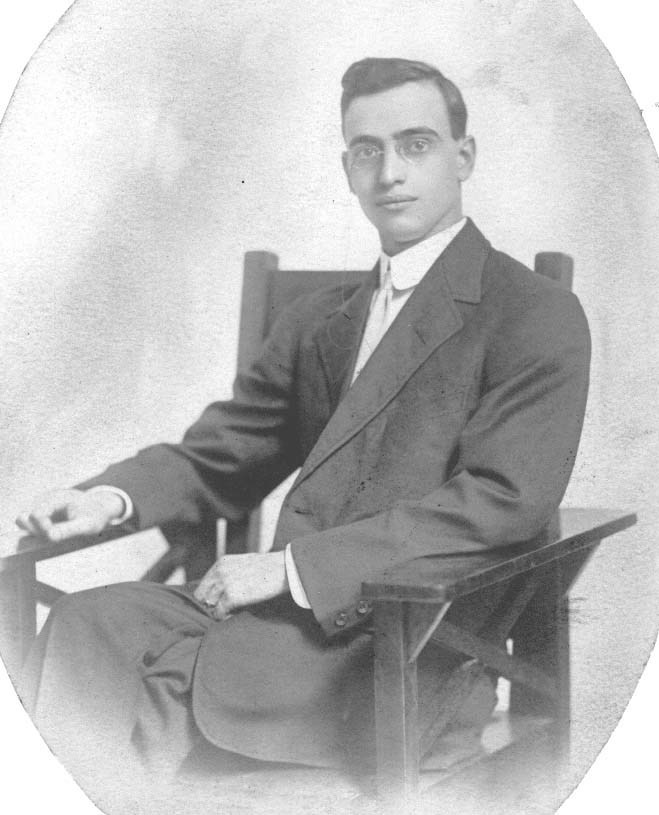
    Leo Frank, who was the Jewish superintendent of a factory in Atlanta, was found guilty of murder and sentenced to death in August, 1913. In 1915, the governor of Georgia commuted Frank’s sentence to life in prison. By that time anti-Semitism was rampant in Georgia, a former governor was calling for the people to form mobs, and my great grandfather was no longer serving in state government. On August 17, 1915, a lynch mob literally attacked the state prison where Frank was being held, transported him 150 miles, and hanged him.

    (Evidence later uncovered, although not conclusive, pointed to another man as the murderer, and in 1986, Frank finally was granted a posthumous pardon.)


    Leo Frank (Photo credit: https://thebreman.org/research/leo-frank/)


    In the aftermath of the lynching, lawyer, newspaper editor and politician Tom Watson called for a revival of the Ku Klux Klan in Georgia and throughout the South. The Klan sought a charter from the Georgia Secretary of State and was officially revived in November of 1915.

    By 1920, Tom Watson was serving in the U.S. Senate and declaring himself to be “King of the Ku Klux.” Klan chapters were being organized throughout the South, and Klan marches were being held in major cities. Watson, now an open racist and member of the Klan, had once been seen as the progressive leader of the Populist Party in Georgia, the party of which my great grandfather had been a member.


    Tom Watson (Photo credit: https://www.georgiaencyclopedia.org/articles/history-archaeology/thomas-e-watson-1856-1922/)


    I don’t know if my great grandfather was Jewish, but my great grandmother had Melungeon and Jewish ancestry, and it was in 1920, in the midst of KKK threats and marches that my great grandparents loaded up their 6 daughters in a wagon and fled in the night to another county in North Georgia where they felt they would be safer. One of those daughters, Annie, was Black and had been taken into the family as a child. My grandmother told me that Annie was raised as their sister.

    My father’s family was in North Carolina and would have faced similar threats. My father’s grandmother always insisted they were “Black Dutch,” and warned my father against ever researching his ancestry.

    Thus, families that had not already hidden their Jewish ancestry certainly began to hide it in the 1920s.

  • The Melungeons: Conversos, Crypto-Jews and Hidden Jews in Southern Appalachia – Part 3, Melungeon Origins

    The Spanish in 16th century Appalachia

    What is the origin of the original 16th century Melungeons of Appalachia?

    It is believed that that the original Melungeons began with the Spanish soldiers, settlers and miners who were living in established forts and towns scattered throughout the Appalachian wilderness. At that time, the capital of Spanish Florida was at Santa Elena on the coast of present-day South Carolina. When the Spanish abruptly moved the capital to Saint Augustine in Florida, these forts and settlements and their inhabitants were abandoned. These abandoned Spanish, most of whom were believed to be Conversos and Crypto-Jews, were 300 miles into the interior of what is now Georgia, North Carolina, and Tennessee.


    Photo credit: Rendering by Richard Thornton, https://apalacheresearch.com/2024/03/19/santa-elena-the-first-capital-of-la-florida/


    Although traditional histories state that the Native Americans killed all of these abandoned Spanish soldiers, this apparently was not the case, as their descendants were the people who the English and Scots-Irish later encountered as they moved to the Appalachian frontier.  The Uchees (Yuchis) and other tribes in these areas had turned their own towns into towns of refuge and took in the Spanish, and the few African slaves with them, who then married Native women.


    An Uchee town in the Georgia Mountains

    Photo credit: Rendering by Richard Thornton https://apalacheresearch.com/2019/07/23/the-uchee-yuchi-everything-you-wanted-to-know-but-were-afraid-to-ask/comment-page-1/


    These early Melungeons of mixed Spanish/Portuguese, Native American and African descent declared themselves to be Portuguese, possibly for two reasons:

    1. Many Portuguese men did sign on as crew on Spanish expeditions
    2. As Jane Gerber states in her book The Jews of Spain, during the Spanish Inquisition the Conversos in major Spanish cities referred to themselves as “Portuguese” because of fear of the Inquisition.

    Researchers cannot definitively prove that the Spaniards in Appalachia were Conversos or Crypto-Jews, but there is evidence that points in that direction. 

    In a webinar sponsored by the Museum of the Southern Jewish Experience, Rabbi Merrill Shapiro spoke about the Sephardic Jewish colonizers of St. Augustine and the later Sephardic explorers in the Appalachian area.

    According to Rabbi Shapiro, Pedro Menendez de Aviles, who founded St. Augustine and became governor of La Florida, took on a “cargo” of between 150 and 300 people in secret, in the dead of night, before departing from Spain in 1565. It is believed that these passengers were Jews seeking to flee the violence of the Inquisition. (In The Jews of Spain, Gerber notes that many Conversos signed on as ships captains or crew, and it was generally acknowledged that the Jewish captains knew where illegal passengers could be landed in America.)


    Pedro Menendez de Aviles

    Photo credit: Wikipedia


    When Menendez’s fleet reached Florida, although land was sighted and some crew disembarked and prepared advance fortifications, no one else got off the ship for another ten days, at which time the land was claimed for Spain.

    Rabbi Shapiro maintains that there is only one explanation for this delay, and that is, that the date on which land was first sighted was the first day of Rosh Hashanah (according to the Julian calendar then in use), and the date on which the land was formally claimed was the day after Yom Kippur. The admiral waited until after the Jewish High Holidays, maybe because he himself was Jewish, but certainly because so many passengers were.

    It was this same Admiral Menendez who the following year sent Captain Juan Pardo (who many scholars believe to have been a Converso) with a large contingent of soldiers and settlers (also possible Conversos) to the town of Santa Elena on the coast of present-day South Carolina.  Menedez had earlier established the town to be the capital of La Florida to prevent the French from expanding into the area.


    Santa Elena, located on Parris Island, SC

    Photo credit: sciencedirect.com


    Pardo was then dispatched on an expedition through the Appalachian Mountains.


    Captain Juan Pardo

    Photo credit: https://confederacinhispanica.wordpress.com/2018/09/29/el-capitan-juan-pardo-y-sus-exploraciones-en-las-carolinas/

    According to some accounts, his goal was to open the eastern end of a road that would eventually connect Santa Elena with Pensacola, Florida. Pardo and his men traveled through the interior of present-day North Carolina, South Carolina, Georgia, Tennessee and Alabama, building as many as six forts and establishing settlement towns.

    Some of these locations were in the areas of Georgia and North Carolina known to have deposits of gold and gemstones, and the Spanish conducted mining activities and set up smelters. Several researchers maintain that the actual mining activities were conducted by Sephardic Jewish miners from the Asturias region of Spain.

    The men who remained at these locations had to swear that they would not depart from the forts without orders from Spanish authorities. Those orders never came, and when Santa Elena was abandoned in 1587, those Spanish soldiers/settlers/miners also were abandoned.

    It is telling that the Spanish forts, towns, and mining operations were located in areas where Melungeons were later found to be living and where many of their descendants continue to live today.

    My father’s family lived for generations in one of those areas of North Carolina, and my mother’s family has lived for generations in one of those areas in North Georgia.

    One of the forts and towns built by Juan Pardo’s men was located less than 10 miles from my house, and evidence of Spanish mining activities, including Spanish artifacts, have been discovered in the Nacoochee Valley area of Northeast Georgia, only two miles from where I live.


    Other Sephardic groups in Appalachia

    Other groups believed to be Sephardic Jews also made their way to the frontier areas of Appalachia and blended in with the Spanish to become the early Melungeons. These groups had fled Spain and moved into southern France and the Netherlands before immigrating to England and then to America.

    Many of the Huguenot (French Protestant) families from the south of France and the so-called “Black Dutch” from the Netherlands may have been Sephardic Jews. (Based on stories passed down in my family, this appears to have been the case for some of my ancestors.)

    Many Scottish immigrants, too, may have had Sephardic Jewish ancestry, according to some researchers. In many cases, the Scots, French and Dutch immigrated through Virginia and Maryland and then formed family/kinship groups (as did my family) and migrated to western North Carolina, western Virginia, western South Carolina, and Tennessee. After the American Revolution, many moved into the still-frontier area of northern Georgia.

    By the mid-1700s, although there were phonetic variations in the spelling of surnames among Melungeons, the surnames themselves remained relatively stable. Those surnames largely were English or Scots-Irish or had been Anglicized. The Judaic, Spanish heritage was perpetuated through given names such as names from the Hebrew Scriptures or actual Spanish given names or place names.

    Several Sephardic customs remain in Appalachia to this day (customs which I always thought were Scots-Irish and still have difficulty believing that they may not be). These include: covering mirrors when someone dies; carefully checking eggs and throwing out any eggs with blood spots; taking care to drain all of the blood from slaughtered farm animals; and sweeping the floor from the corners of the room to the center, then gathering up the dust/debris so as not to sweep it past the mezuzah (even though Appalachian families, as a rule, don’t have a mezuzah on the doorpost).


    Apart from the naming patterns and the above mentioned customs, Spanish Sephardic heritage was completely forgotten in most Melungeon families, was known but hidden in some families, and was remembered and passed down in other families.

  • The Melungeons: Conversos, Crypto-Jews and Hidden Jews in Southern Appalachia – Part 2, Present-Day Melungeons

    Present-day Melungeons

    So who are the Melungeons today? There are major disagreements among Melungeon descendants as to who can claim to be a real Melungeon and what ethnicities can be found in the DNA of “real” Melungeons.

    The Melungeons who live in Hancock County, Tennessee and Wise County, Virginia claim that they are the only true Melungeons alive today. However, I am using the broader definition of possibly hundreds of thousands of people whose families have hidden their heritage or are not even aware of their heritage.

    To this day, the word “Melungeon” is used as a pejorative. In the past, the darker-skinned Melungeons who had been classified as Free Persons of Color lost their right to vote, to serve on juries, testify in court, and to receive public education. The knowledge that Melungeons are known to be tri-racial stops many modern Melungeons who look very “white” from accepting their ancestry. I proudly claim my Melungeon and Jewish heritage, but I have close friends who will not utter the word Melungeon even though they, too, are of Melungeon descent.

    How does one know one is a Melungeon? There is no actual proof, no paper genealogy.

    Families had the custom of giving children the same names. Related families with the same surname would, for example, all give the name John to a son. There could be five or six men named John Jordan, all of about the same age, all living in the same county.  

    Historically, as many as three or four families would often intermarry and then move as a group from one frontier region to another where they would continue to intermarry for three or four more generations. This occurred in my family, as the Prince, Berry, and Earle families in Virginia intermarried, migrated into the Carolinas prior to the American Revolution, and continued to intermarry into the late 1800s.

    Families often avoided the census or lied to the census takers. People researching their family history today sometimes will be able to discover quite a bit about their male ancestors but find that their female ancestors are genealogical “brick walls.”  In many families, it appears to be the female lines through which the Jewish heritage comes.

    For many people, the decidedly Mediterranean appearance, that doesn’t mesh with family stories about being 100% from the British Isles, causes them to wonder about their heritage. DNA testing then shows relatively high percentages of Iberian ancestry. And some people develop medical conditions that are found primarily in Mediterranean populations.

    Strange, non-Anglo given names are often found in Melungeon families. In my own family, for many generations, there always was at least one daughter with the middle name of Parazaide.

    Certain surnames appear over and over in families of Melungeon descent, and these names can be found in published lists. Several of these surnames are in my own family.

    And finally, many people just begin asking older relatives. At least three decades ago I asked my father directly if we were Melungeon, and his strange answer let me know we were. Similarly, his insistence that we were almost 100% English and a little “Black Dutch” was my first clue that we were, in fact, of Sephardic Jewish descent.