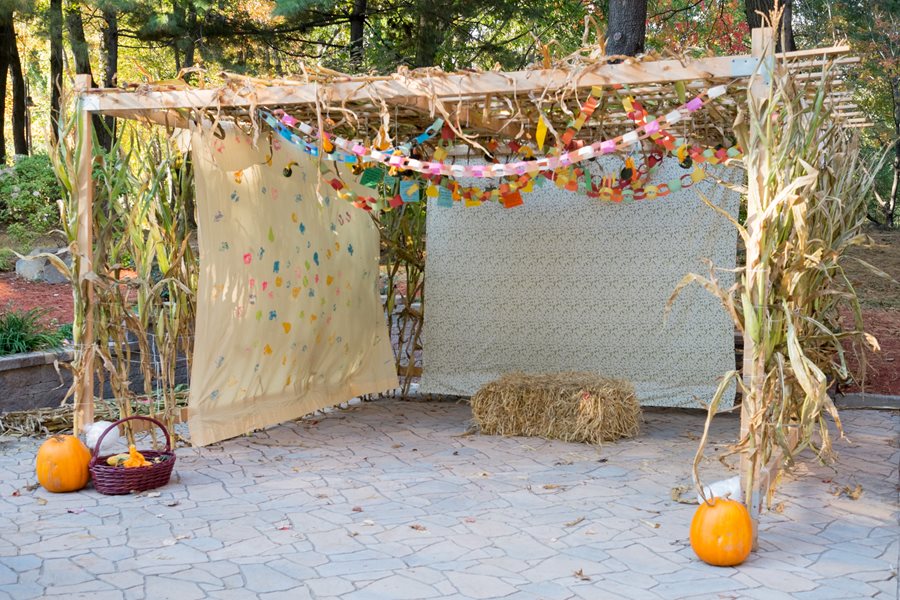
This week Jews around the world are celebrating the holiday of Sukkot, an annual holiday that follows the High Holy Days of Rosh Hashanah and Yom Kippur. The word Sukkot means “booths” or “huts,” and the holiday is both an agricultural festival of thanksgiving and a commemoration of the years spent wandering in the desert with no permanent homes.
In the Hebrew Scriptures, Sukkot is referred to as the Feast of Booths. Christians may be familiar with the term Feast of Tabernacles which is used in the 7th chapter of John, describing how Jesus traveled to Jerusalem for the week-long festival.
To celebrate the festival today, Jews often build a sukkah, a temporary shelter with at least three sides and a roof-covering of natural materials that provide shade yet allow those sitting in the sukkah to see the stars at night. Sukkahs can be as simple or as elaborate as each family or community desires. Meals may be eaten in the sukkah, and in some cases people sleep in the sukkah overnight.
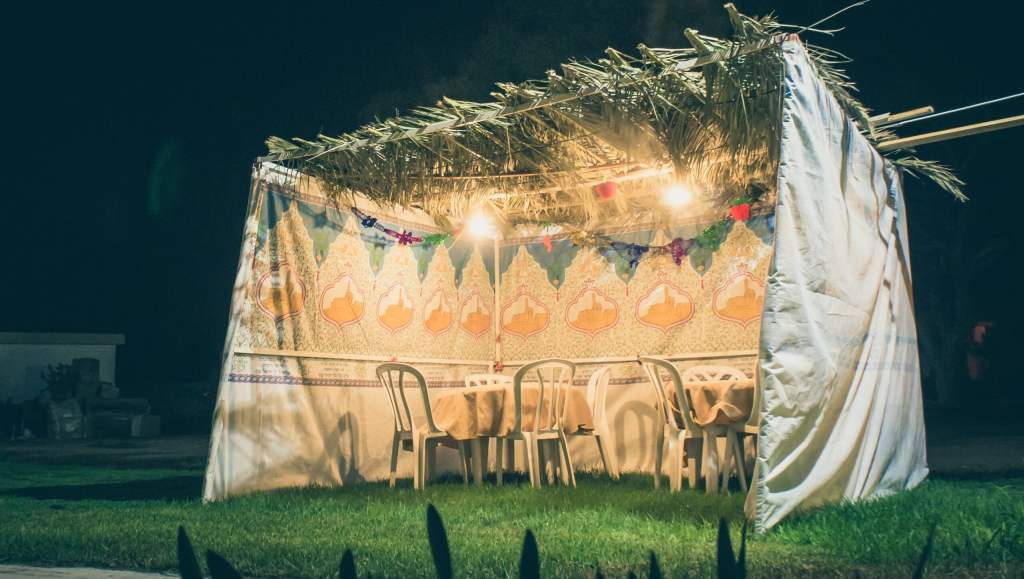
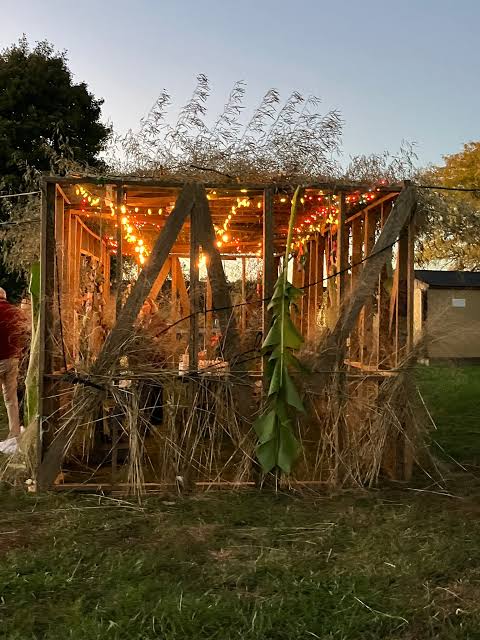

I have somewhat of a makeshift sukkah on one end of my front porch, and I am spending some time every day sitting there. Because of where I live, and due to the fact that there are wild animals (bears, cougars, bobcats, and coyotes) around my property, I don’t set up a proper sukkah either in front of or in back of my house, and I would never sleep in my makeshift sukkah on my front porch.
Extending hospitality to others is a custom during Sukkot. Tradition states that there are special guests who are there in spirit: Abraham, Isaac, Jacob, Moses, Aaron, and David. Today, Jews are encouraged to add women of the Bible to that list and to invite friends and relatives to join them in the sukkah.
Sukkot is also a wonderful time to honor our own personal ancestors, and many Jewish communities have begun asking their members to consider who they would invite to join them in the sukkah if they could. My Central Synagogue community did this tonight, and people shared family stories about parents, grandparents, aunts, uncles, other relatives, and friends who inspired them or were influential in their lives.
I thought about who I would invite and shared that if I could invite any of my ancestors into my sukkah, I would invite my great-great grandparents, Ceborn and Eliza Westmoreland through whom my Jewish ancestry comes on my mother’s side.
My ancestors have lived in Appalachia since before the Revolutionary War, and there were always Sephardic Jews in my family. Ceborn was a Melungeon, which is a mixed-race group of Appalachian people with Sephardic, Northern European, African, and Native American ancestry. Eliza also had Sephardic ancestry, her family having fled the Spanish Inquisition, and after several generations in France and England, making their way to America. This ancestry was hidden, apparently being passed down by word of mouth to one person in each generation. I happened to be the person who was told almost 100 years later.
Ceborn and Eliza were born in the hills of Appalachia in the early 1840s. They married in 1860 when Ceborn was 20 years old and Eliza was only 16.
Six months after they married, the Civil War broke out. Knowing he would be drafted anyway, Ceborn joined the Confederate army as a conscientious objector, stating that he would never point a gun at another human being. He was detailed as a combat medic and served in field hospitals on the front lines in Kentucky, Tennessee, and Georgia. Eliza and her sisters-in-law essentially worked in the resistance, providing assistance to those fleeing the war.
After the Civil War, Ceborn was ordained as a Baptist preacher, but he later abandoned Christianity and became known to his extended family as “The Infidel.” He opened a dry goods store, and when he died, he was remembered as a man “whose life was spent in helping the needy, out of his great love for humanity.”
Ceborn and Eliza had 10 children, and I am descended through one of their younger daughters, Lillie, who I knew well, as she lived to be almost 112. In 1920, that daughter (my great grandmother) and her husband, who was a former state legislator and progressive attorney living in Athens, GA, had to flee rampant anti-semitism and the Ku Klux Klan, loading their 6 daughters in a wagon and traveling in the dead of night to Ceborn and Eliza’s home further back in the hills.
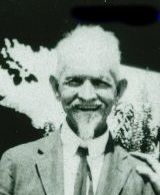
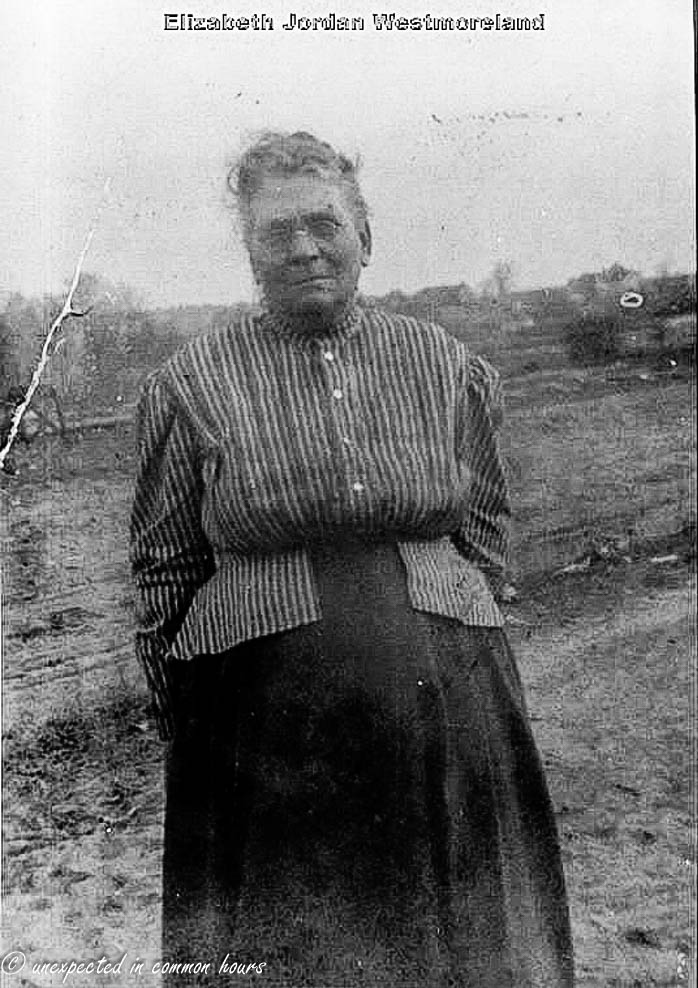
Ceborn Westmoreland and Eliza Westmoreland
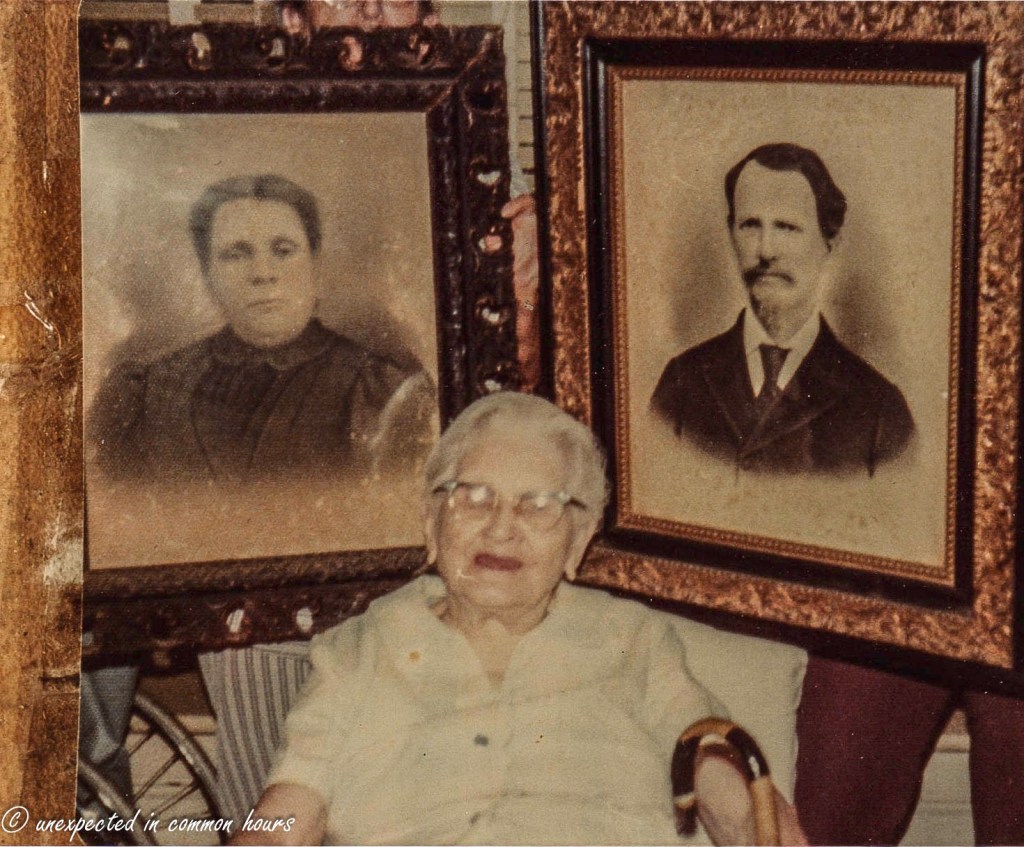
My great grandmother, Lillie Westmoreland Dorough, with photos of Ceborn and Eliza
Ceborn and Eliza lived long lives, and I’ve always felt a connection with them. I would love to be able to invite them into my sukkah and sit down with them and hear their stories firsthand.

